

Are Expensive Tires Actually Better Than Budget Options
Last Updated: October 26, 2026
Quick Summary
Expensive tires are better only in specific ways: they earn their price in wet braking, tread life, and road noise, while budget tires now close much of the gap in dry grip and everyday durability. Match the price tier to your climate and annual mileage rather than buying the most expensive option.
- Premium tires justify their cost through higher-grade silica compounds, tighter construction tolerances, and longer treadwear warranties.
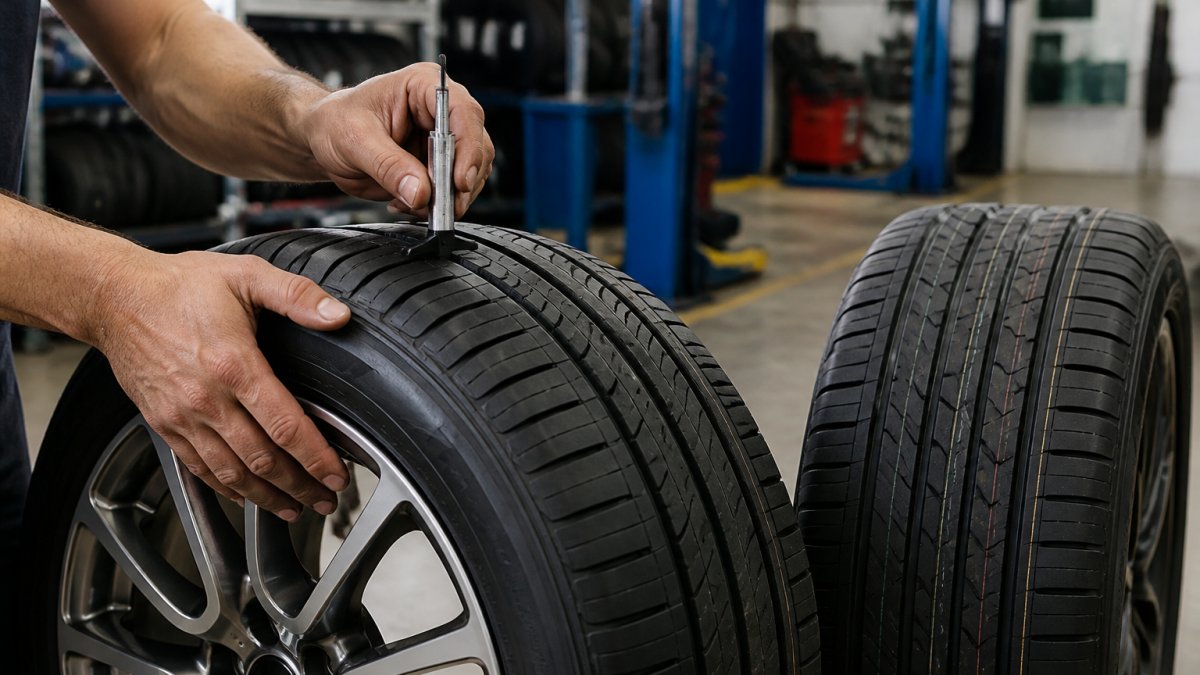
- A brand-new budget tire beats a worn premium tire every time, because tread depth matters more than the badge.
- A budget tire at $179.60 lasting 60,000 kilometers costs about $0.30 per kilometer per tire.
- A premium tire at $426.61 lasting 100,000 kilometers costs about $0.43 per kilometer per tire.
- If you drive 8,000 kilometers a year, the budget tire is almost always the better financial decision.
Table of Contents
- The Verdict: Expensive Tires Win on Some Metrics, Not All
- Cheap vs. Expensive Tires: What the Price Gap Actually Buys
- Tire Price vs. Performance: Traction, Braking and Road Noise
- Tire Tread Life and Warranty: The Cost-Per-Kilometer Test
- Are Premium Tires Worth It for Your Vehicle and Climate?
- How to Read Tire Tests and Ratings Before You Pay More
- Start With Your Vehicle Before You Choose a Price Point
- Frequently Asked Questions
The Verdict: Expensive Tires Win on Some Metrics, Not All
Are expensive tires actually better? The honest answer is: sometimes, and only in specific ways. Premium tires tend to earn their price in wet braking, tread life, and road noise, while budget tires now close much of the gap in dry grip and everyday durability.
The key insight most buyers miss is that tire price tracks three things: rubber compound quality, manufacturing consistency, and brand overhead. Only the first two affect how the tire performs on your vehicle. The third is pure margin.
Where Premium Rubber Earns Its Price
Premium tires justify their cost in measurable, repeatable ways. Higher-grade silica compounds keep their grip as temperatures drop, which matters through a long Canadian shoulder season. Construction tolerances are tighter, so the tire runs rounder and quieter at highway speed.
The trade-off is real, though. You pay for that engineering up front, and if you only drive a few thousand kilometers a year on dry pavement, much of it goes unused.
Where Budget Tires Close the Gap
Budget tires have improved dramatically, and the gap is no longer the chasm it was a decade ago. Modern budget all-seasons deliver solid dry traction, acceptable tread life, and safe stopping in normal conditions.
Here is where we would draw the line. A brand-new budget tire beats a worn premium tire every time. Tread depth and compound integrity matter more than the badge on the sidewall.
Cheap vs. Expensive Tires: What the Price Gap Actually Buys
The price gap between cheap and expensive tires buys three concrete things: better wet-weather compounds, more consistent construction, and longer warranted tread life. It does not automatically buy better dry grip, and it does not guarantee a quieter ride on every vehicle. That distinction is where most buying decisions go wrong.
Think of it as a sliding scale rather than a binary. A mid-range tire often captures most of the premium benefit at a fraction of the cost.
| Price Tier | Wet Grip | Tread Life | Road Noise | Best For |
|---|---|---|---|---|
| Budget | Adequate | Shorter | Louder | Low annual mileage, second vehicles |
| Mid-range | Good | Solid | Moderate | Most daily drivers |
| Premium | Strongest | Longest | Quietest | High mileage, wet climates, highway commuters |
What the table cannot show is why the gap exists. Three mechanisms drive most of the difference:
- Compound chemistry. Premium wet tires typically use higher-silica, higher-oil compounds that stay flexible at lower temperatures. Budget tires often use harder compounds that trade wet grip for treadwear. The practical result is a shorter wet stopping distance on premium rubber, especially as temperatures drop toward freezing.
- Construction consistency. Tighter manufacturing tolerances mean the tire is rounder and more uniform, which reduces vibration and irregular wear. Budget tires can still be safe, but variation between individual units is wider, so two tires of the same model may not perform identically.
- Warranty and service terms. Premium lines often carry longer treadwear warranties and road-hazard coverage. Budget warranties are usually shorter and more heavily prorated, so the headline number overstates the real payout.
A common pattern in independent testing is that the price premium buys the most in wet braking and the least in dry grip.
What most guides get wrong is treating this as a status purchase. It is a mileage and climate calculation.
Tire Price vs. Performance: Traction, Braking and Road Noise
(https://www.burtbrothers.com/tires)).Wet Grip and Stopping Distance
Wet traction is where premium rubber earns its keep most convincingly. Better silica compounds and deeper, more effective siping evacuate water faster, which shortens stopping distance on soaked pavement. Tire-industry testing cited by Sailun found that more expensive tires can degrade significantly as they wear, with a larger difference in stopping distance once tread is low (Sailun on tire price and wear).
For a performance-oriented all-season option, you can view the Yokohama AVID Ascend GT 235/45R17 97V XL Tire to compare its specs against your vehicle's needs.
Ride Comfort, Noise and Rolling Resistance
Ride comfort and road noise are the quiet luxuries of premium tires. Tighter construction and acoustic foam inserts on some premium lines cut cabin noise noticeably at highway speed.
The catch is that these benefits are vehicle-dependent. A stiff performance tire on a light car may ride harshly no matter the price. We tell customers to match the tire to the vehicle, not the other way around.
Tire Tread Life and Warranty: The Cost-Per-Kilometer Test
The real test of tire value is cost per kilometer, not sticker price.
Run the numbers against your own annual mileage.
Pirelli Scorpion Verde 235/50R19 99V s-i Tire →
For a budget all-season that holds up well on cost per kilometer, check the Nexen N'Priz AH5 All Season Tire P205/55R16 89T.

Watch out: treadwear warranties are prorated and rarely pay out the full replacement cost. Read the fine print before you let a long warranty sway your decision.
Are Premium Tires Worth It for Your Vehicle and Climate?
Premium tires are worth it when your driving conditions demand the extra grip and your annual mileage justifies the cost. In a variable climate with long wet and cold seasons, the wet-braking and cold-compound advantages of premium rubber translate into a genuine safety margin.
If you want a premium example that fits a larger vehicle and a mixed climate, view the Pirelli Scorpion Verde 235/50R19 99V s-i Tire. For drivers who want one tire to handle year-round conditions, the Nexen N'blue 4 Season 235/60R18 107V XL Tire is an all-weather option worth comparing.

Our rule of thumb: if you commute on highways in the rain and cold more than a few months a year, premium is worth it. If your car mostly sits in a garage, save the money.
How to Read Tire Tests and Ratings Before You Pay More
Tire tests and ratings are only useful if you know what they measure and who paid for them. Manufacturer-published ratings lean favorable, so look for independent testing that compares tires side by side in the same conditions.
Here is what each UTQG grade actually tells you, and what it does not:
- Treadwear. A comparative number, not a mileage guarantee. A tire graded 500 is expected to last about twice as long as one graded 250 under the same conditions, but driving style, alignment, inflation, and road surface can swing real-world life by tens of thousands of kilometers. The grade is assigned by the manufacturer, not an independent lab.
- Traction. A letter grade (AA, A, B, C) for wet braking on a straight-line test surface. It does not measure hydroplaning resistance, cornering grip, or winter performance. A tire can earn an A and still be poor in deep water or snow.
- Temperature. A letter grade (A, B, C) for heat resistance at highway speed. It matters for sustained high-speed driving and heavy loads, not for everyday commuting.
When you read an independent test, check four things:
- Same vehicle and conditions. A test on a heavy SUV does not predict how a tire behaves on a compact car. Look for the test vehicle, surface, temperature, and tire size.
- New versus worn. Many tests measure new tires only. Ask how the tire performs at half tread, because wet braking degrades as tread wears, and premium tires can lose more of their advantage once worn.
- Category match. A touring tire and a performance tire are not competing on the same metrics. Compare all-season to all-season, winter to winter.
A common mistake is comparing a premium tire's new-tire score to a budget tire's worn score. Compare like for like, or the numbers mislead.
Use ratings to narrow the field, then confirm fitment and intended use.
Start With Your Vehicle Before You Choose a Price Point
Start with your vehicle's specifications, not the price tag. Tire size, load rating, and speed rating set the boundaries of what is safe to fit, and no amount of premium rubber fixes the wrong size. Confirm your vehicle's requirements first, then choose the price tier that matches your climate and mileage.
At Project Wheel Works, our team verifies fitment before you order so you do not end up with a tire that needs spacers or does not clear your brakes. A mid-range all-season like the General Tire AltiMAX RT45 215/55R18 95H often delivers the best balance of price and performance for a daily driver.

Frequently Asked Questions
Are more expensive tires actually better?
They are better on specific measures, not automatically overall. Premium tires typically put more money into tread compound and construction, which shows up in wet braking, ride comfort and wear consistency. The catch is that you can pay for capability your driving never uses. A premium all-season on a commuter car that never sees a highway ramp at speed may not return the extra cost, while a budget tire on a heavy vehicle used in winter slush may fall short on grip. Match the tire to how and where you drive before you match it to a price.
Do expensive tires last longer than cheap tires?
Often yes, but not always enough to offset the price. Longer tread life comes from better compounds and more consistent wear across the tread, so premium tires frequently deliver more kilometers before replacement. Run the math on cost per kilometer rather than sticker price: divide the tire price by expected tread life. A $426.61 tire that lasts 80,000 km costs about 0.53 cents per kilometer, while a $179.60 tire that lasts 50,000 km costs about 0.36 cents. The cheaper tire can still win on cost even when it wears faster.
What makes some tires more expensive than others?
Raw materials and testing are the biggest drivers. Silica-rich compounds, specialized polymers and reinforced sidewalls cost more than basic rubber blends, and premium brands spend heavily on proving wet grip and durability. Size and speed rating matter too: a 235/50R19 99V tire carries more material and higher load requirements than a 205/55R16 89T, so the price gap partly reflects specification, not just brand. Low-volume sizes and all-weather construction add further cost.
How can I compare tire performance before buying?
Look for tests that state the tire size, the vehicle, the surface and the measurement, then compare like with like. A wet braking figure only means something if the reference tire and test conditions are named. Check the load rating and speed rating against your vehicle's placard, and confirm the size matches before you weigh any performance claim. If a rating site lists a tire in a different size than yours, treat the result as a rough guide, because compounds and construction can change between sizes.
Are premium tires worth it in Canadian winter conditions?
It depends on the tire type, not the price tag. An all-weather tire like the Nexen N'blue 4 Season is built for cold-season flexibility, while a standard all-season hardens as temperatures drop. If you face regular snow and ice, a dedicated winter or all-weather tire at a mid price point usually beats a premium all-season for cold-weather grip. Spend on the tire type that matches your climate first, then decide whether the premium version of that type is worth the upgrade.
The real challenge is not picking the most expensive tire. It is matching price to your vehicle, your climate, and how many kilometers you actually drive. Project Wheel Works takes the guesswork out of that decision with expert fitment support, Canada-wide shipping, and professional local installation. Get started with Project Wheel Works and fit the right tire to your vehicle the first time.
