

How to Choose Winter Tires for a Rear-Wheel-Drive Car
Last Updated: October 25, 2026
Quick Summary
Choose winter tires for a rear-wheel-drive car by fitting four matching tires with a soft cold-weather compound and the three-peak mountain snowflake symbol, in the size and load rating your vehicle requires. Because the rear tires both push the car and hold the back end in line, never mix winter tires with all-seasons on a RWD car.
- Look for the three-peak mountain snowflake symbol on the sidewall as proof of a real winter tire.
- Studded tires suit hard-packed ice and steep grades, while studless tires handle mixed plowed conditions quietly.
- Fit winter tires to all four wheels with the same brand, model, size and similar tread depth.
- Check the tire placard on the driver's door jamb or owner's manual for exact size and ratings.
- Never fit a tire with a lower load or speed rating than your vehicle requires.
Table of Contents
- Why a Rear-Wheel-Drive Car Needs Winter Tires More Than Most
- Best Winter Tires for Rear-Wheel-Drive Cars and What to Look For
- Studless vs Studded Winter Tires: Which Suits Your Roads
- Winter Tires on All Four Wheels: Why Mixing Is Not an Option
- A Winter Tire Size Guide for Rear-Wheel-Drive Fitment
- Start With Your Vehicle Before You Order
- Frequently Asked Questions
Why a Rear-Wheel-Drive Car Needs Winter Tires More Than Most
A rear-wheel-drive car pushes power to the back axle, and that single fact changes everything about winter driving.
Winter tires are tires built with a rubber compound that stays soft in cold temperatures and tread patterns designed to bite into snow and ice. Summer tires and all-season tires harden as the mercury drops, which cuts grip exactly when you need it most.
What Changes When Power Goes to the Back Wheels
On a rear-wheel-drive car, the rear tires do two jobs at once. They push the car forward and they hold the back end in line. Lose grip back there and the rear steps out.
That is why a RWD car can feel twitchy on ice while a front-wheel-drive car plows safely ahead. The fix starts with proper winter rubber on every corner.
- Cold-weather performance: winter compound stays flexible below freezing
- Snow traction: deep tread blocks clear snow and slush
- Ice traction: biting edges grip slick surfaces
Transports Québec winter tire research review examined winter tire performance in cold conditions, and the broader body of testing points the same way: dedicated winter rubber outperforms all-season tires when temperatures fall.
Best Winter Tires for Rear-Wheel-Drive Cars and What to Look For
The best winter tires for rear-wheel-drive cars share three traits: a soft cold-weather compound, a certified snow rating, and the correct size and load rating for your vehicle. Get those right and the car behaves predictably.
Look for the three-peak mountain snowflake symbol, often called the 3PMSF symbol, on the sidewall. That mark means the tire passed a standardized snow traction test.
Three Winter Tires That Suit RWD Setups
We stock winter tires that fit many RWD cars and SUVs. Here are three worth a close look.
Bridgestone Blizzak WS90 (225/65R16 100T) is a studless winter tire built for confident ice and snow grip. Check the size and load rating against your vehicle before ordering. See the Bridgestone Blizzak WS90 winter tire.

Toyo Observe G3 Ice comes in both studdable and studded forms, so you can match the tire to your roads. Drivers who face hard-packed ice often lean toward the studded version. View the Toyo Observe G3 Ice winter tire.
Michelin X-Ice Snow is a studless option known for cold-weather traction and a quiet ride. It suits drivers who want strong ice grip without studs. Compare the studded Toyo Observe G3 Ice.
| Tire | Type | Best For | Studdable |
|---|---|---|---|
| Bridgestone Blizzak WS90 | Studless | Mixed snow and ice | No |
| Toyo Observe G3 Ice | Studdable or studded | Hard-packed ice | Yes |
| Michelin X-Ice Snow | Studless | Quiet cold-weather grip | No |
Studless vs Studded Winter Tires: Which Suits Your Roads
Studless winter tires use a soft cold-weather compound and dense biting edges to grip ice. Studded tires add metal studs to that package for extra bite on hard-packed snow and ice.
Most practitioners find that a good studless winter tire is the better all-around choice for mixed winter conditions: plowed arterials, fresh snow, slush, and bare pavement. Studs earn their keep on hard-packed ice, steep grades, and shaded roads that stay icy for days after a storm.
A Practical Decision Framework
Work through these questions in order. The first one that clearly points to studs usually settles it.
- How often do you drive on hard-packed ice? If ice is a weekly reality on your commute or you regularly climb steep grades, studs are worth considering. If ice is occasional and roads are plowed and salted, studless tires are usually enough.
- What kind of road do you spend most time on? Studs are at their best on ice and hard-packed snow. On dry or wet bare pavement, studs can reduce grip and wear faster, and they are louder.
- How much noise can you live with? Studded tires produce a characteristic hum and more road noise. If quiet cruising matters, studless is the safer bet.
How This Plays Out on a Rear-Wheel-Drive Car
On a RWD car, the rear tires carry the drive force and hold the back end in line.
Bridgestone BLIZZAK WS90 225/65R16 100T Tire →
If your roads are mostly plowed and you want strong ice grip without the noise and seasonal restrictions, a studless tire is the simpler choice. If you face persistent hard-packed ice and steep grades, a studdable tire run with studs may suit you better.
Winter Tires on All Four Wheels: Why Mixing Is Not an Option
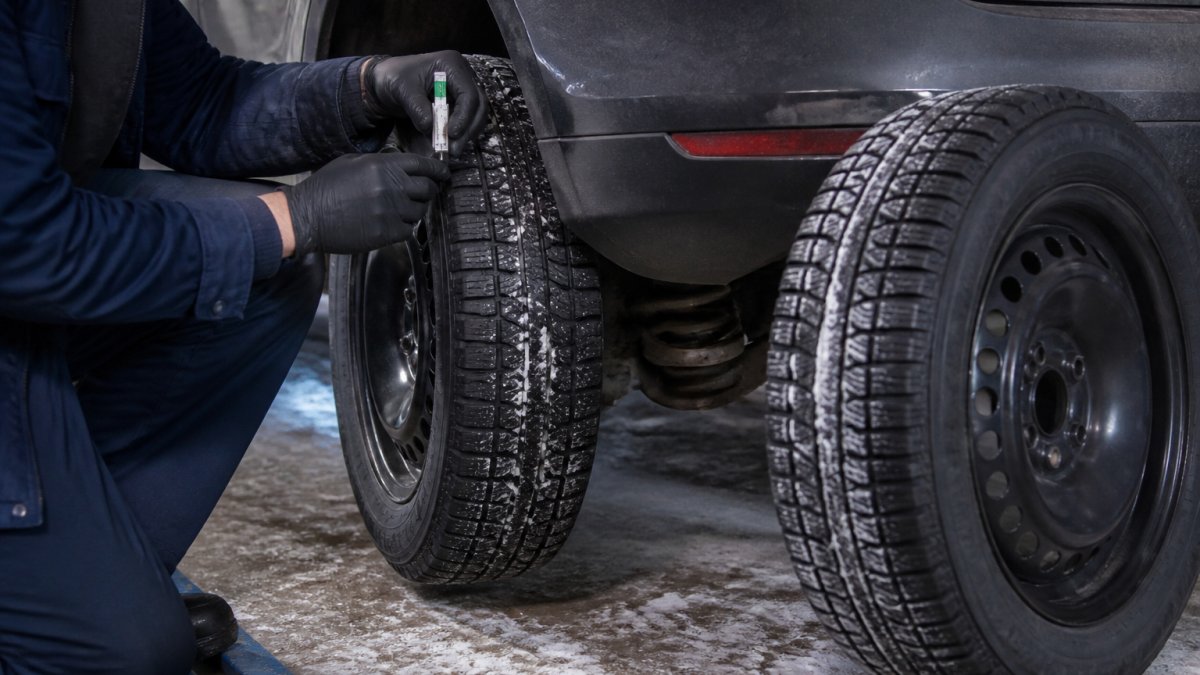
Fit winter tires to all four wheels, every time. On a rear-wheel-drive car, mixing tire types across the front and rear axle is not just uneven, it is the setup most likely to spin you out.
What Actually Happens When Grip Is Mismatched
A tire's grip depends on its compound, tread depth, and construction. Put winter tires on the rear and all-seasons on the front, and the rear axle has more grip than the front.
Reverse it, winter tires on the front, all-seasons on the rear, and the problem is worse for a RWD car.
Even within a set, tread depth matters. A rear tire with deeper tread than the front changes the balance.
The Four-Tire Rule in Practice
- Same brand and model on all four corners, so the compounds and tread patterns match.
- Same size and load rating as the vehicle's approved fitment.
- Similar tread depth across the set; replace the set together rather than mixing worn and new.
Four matching tires keep handling balanced and predictable. That is the whole point: on a RWD car, the rear tires both push and stabilize, and they can only do both jobs if they match the front.
A Winter Tire Size Guide for Rear-Wheel-Drive Fitment
Your winter tire size must match your vehicle's approved fitment. Check the tire placard on the driver's door jamb or the owner's manual for the exact size, load rating, and speed rating.
A common size like 205/60R16 fits many sedans. If that is your size, check the BFGoodrich Winter T/A KSI Winter Tire 205/60R16 92T as a matching example with the right load and speed rating.

Reading the Sidewall and Confirming Load and Speed Ratings
Every number on the sidewall matters. Take 215/60R16 95T: 215 is the width in millimeters, 60 is the sidewall height as a percentage of width, and R16 is the wheel diameter in inches.
Never fit a tire with a lower load or speed rating than your vehicle requires. To see these markings in context, view the Dunlop Winter Maxx 2 Winter Tire 215/55R16 97T XL.

Start With Your Vehicle Before You Order
The right winter setup starts with your vehicle, not the tire catalog. Confirm your size, drivetrain, and the roads you drive, then match the tire to those facts.
At Project Wheel Works, we offer expert fitment support so you order the correct size the first time.
Get started with Project Wheel Works and put the right winter tires on your rear-wheel-drive car this season.
Frequently Asked Questions
Should you put winter tires on all four wheels of a rear-wheel-drive car?
Yes. Fitting winter tires on all four wheels is the only safe setup for a rear-wheel-drive car. If you fit them only on the rear, the front tires keep all-season grip while the rear has winter grip, so the axles behave differently under braking and steering. Bridgestone's guidance is to fit winter tires to every wheel position, including on rear-wheel-drive vehicles. Four matching winter tires keep handling and vehicle stability predictable, and they let you rotate front to rear to even out tread wear.
Are studded or studless winter tires better for a rear-wheel-drive car?
It depends on the surface you drive on most. Studded tires with tire studs bite into hard-packed snow and ice, which helps a light rear end find traction on frozen intersections. On fresh snow, slop or slush, studs add little and can reduce grip compared with a good studless winter tire. Studless tires rely on tread compound and siping and are quieter on bare pavement. If your routes are mostly plowed and salted, studless is usually the better all-around pick; if you regularly cross hard ice, studs are worth considering.
What is the 3PMSF symbol and why does it matter when choosing winter tires?
The three-peak mountain snowflake, or 3PMSF symbol, is a marking molded into the tire sidewall that shows the tire meets a recognized winter traction standard. Look for it before you buy. In some markets a separate Ice Grip designation exists for tires tested on ice, so check the sidewall markings rather than relying on the product name. A tire labeled all-season without the 3PMSF mark is not a winter tire, no matter how aggressive the tread looks.
How do I choose the right winter tire size for an RWD car?
Start with the size printed on your vehicle's tire placard or in the owner's manual, not the size of the tires currently mounted. The sidewall code, for example 225/65R16 100T, gives width, aspect ratio, rim diameter, load rating and speed rating. Keep the load rating at or above the original and match the speed rating to what the vehicle requires. A narrower winter tire is a common choice for cutting through snow, but confirm approved fitment for your wheel and brake package before ordering.
